
OpenClaw vs Hermes Agent (2026) — Komparasi Jujur, Tanpa Bacot
📎 Source:openclaw-vs-hermes-agent-2026.md — view on GitHub & star ⭐
OpenClaw vs Hermes Agent — Comprehensive Comparison Guide (2026)
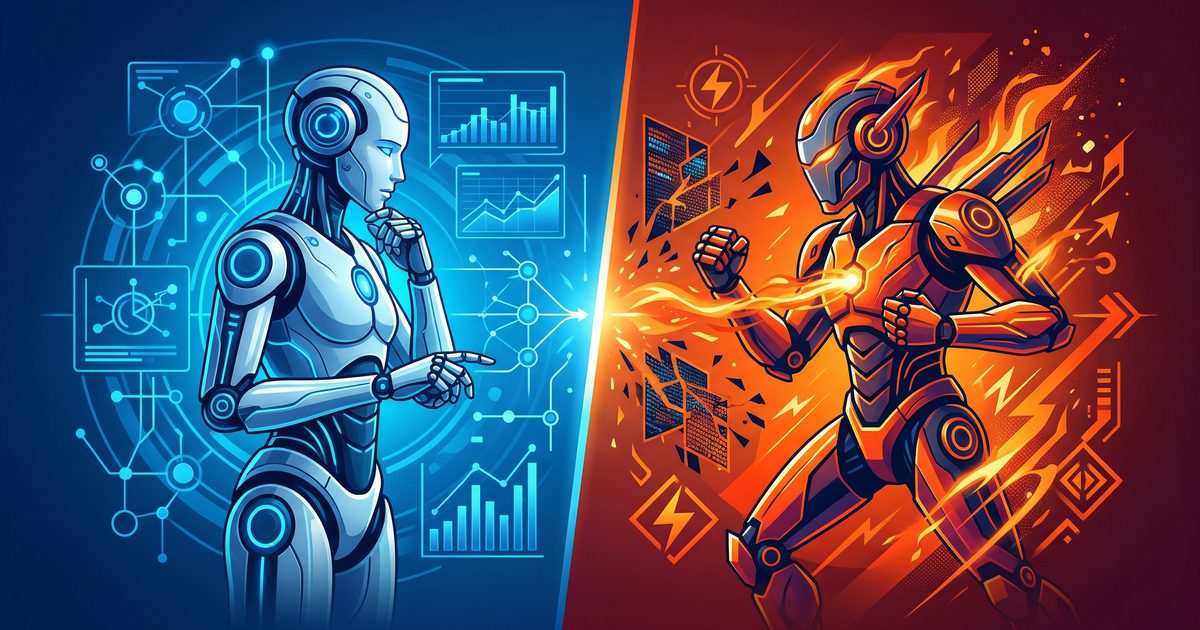
Two of the most powerful open-source AI agents in 2026. Which one should you pick?
Table of Contents
- What is OpenClaw?
- What is Hermes Agent?
- Architecture Comparison
- Feature-by-Feature Comparison
- Memory System
- Skills & Extensibility
- Multi-Platform Support
- Cost & Performance
- Pros & Cons
- Use Case Recommendations
- Summary
What is OpenClaw?
OpenClaw is the most popular open-source AI agent with 307k+ GitHub stars (as of March 2026). Built by the OpenClaw community, it transforms any LLM into an autonomous digital assistant that runs on your server, connects to your messaging apps, and remembers everything.
Core Philosophy
"Give an LLM hands, eyes, and ears — then let it live on your machine."
OpenClaw is local-first. Your data, memory, skills, and conversations stay on your hardware. The gateway connects to Telegram, WhatsApp, Discord, Slack, iMessage, Signal, and more — acting as a single unified interface for all interactions.
Key Characteristics
- Node.js runtime — single process, five subsystems
- Markdown-based skills — extend capabilities without writing code
- Local-first data — all memory stored as
.mdand.yamlfiles - 24/7 daemon — runs as a systemd service, proactively reaches out
- Model agnostic — Claude, GPT-4o, Gemini, Ollama, anything
- Multi-agent orchestration — spawn sub-agents for parallel tasks
- Cost-aware design — tiered model routing, caching, zero-waste architecture
Quick Start
curl -fsSL https://openclaw.ai/install.sh | bash
openclaw setup    # Interactive wizard
openclaw gateway  # Connect messaging platforms
What is Hermes Agent?
Hermes Agent is an open-source AI agent by Nous Research with ~6k GitHub stars. It focuses on self-improvement and autonomous skill creation — the agent literally programs itself by turning learned approaches into reusable skills.
Core Philosophy
"An agent that grows with you. It learns, remembers, and gets more capable the longer it runs."
Hermes differentiates itself through its self-improving loop. After every 15 tasks, it evaluates performance, refines existing skills, and creates new ones based on patterns it discovered. It's the only open-source agent that can contribute to improving its own AI model through batch trajectory generation via Atropos RL.
Key Characteristics
- Python runtime — lightweight, fast to deploy
- Self-improving loop — autonomous skill creation from experience
- Persistent cross-session memory — FTS5 full-text search with LLM summarization
- User Modeling Engine (Honcho) — builds a model of your working style
- Five execution backends — local, Docker, SSH, Singularity, Modal
- Container hardening — namespace isolation for security
- Atropos RL integration — feeds agent experience back into model training
Quick Start
curl -fsSL https://raw.githubusercontent.com/NousResearch/hermes-agent/main/scripts/install.sh | bash
hermes setup     # Interactive wizard
hermes gateway setup  # Connect messaging platforms
hermes           # Start chatting
Architecture Comparison

Runtime Differences
How They Think

The key architectural difference: Hermes has a self-improvement loop that evaluates its own performance and creates new skills. OpenClaw relies on human-authored skills and manual updates.
Feature-by-Feature Comparison
Core Capabilities
Messaging Platforms
OpenClaw wins on platform coverage — especially for Asian messaging apps (WeChat, QQ, DingTalk) and privacy-focused platforms (Signal, iMessage).
Model Support
Memory System
This is where both agents shine, but with fundamentally different approaches.

OpenClaw Memory
- Human-readable: Everything stored as
.mdfiles — you can open them in any text editor - MEMORY.md: Curated long-term memory, manually maintained by the agent
- Daily files:
memory/YYYY-MM-DD.mdfor raw daily logs - SOUL.md: Agent personality and behavior rules
- USER.md: User preferences and context
- DuckDB: Vector embeddings for semantic search
- Manual curation: Agent decides what's worth keeping long-term
Hermes Memory
- FTS5 search: SQLite full-text search across all past interactions
- LLM summarization: Automatically condenses old conversations to save context
- Persistent: Survives restarts and even migration between servers
- Curated files: Similar MEMORY.md and USER.md approach
- Searchable history: Every past conversation is queryable
Memory Comparison
Skills & Extensibility
OpenClaw Skills
Skills are Markdown files (SKILL.md) that contain natural language instructions. No code required — just write what the agent should do, and it follows.
skills/
├── morning-briefing/
│   └── SKILL.md          ← Just instructions
├── smart-search/
│   ├── SKILL.md
│   └── scripts/
│       └── search.sh     ← Optional helper scripts
└── humanizer/
    └── SKILL.md
Pros: Anyone can create skills. No programming needed. Community shares skills via ClawHub.
Cons: Less structured. Quality depends on prompt writing skill. Hard to enforce deterministic behavior.
Hermes Skills
Hermes takes a different approach — skills are auto-generated from the agent's experience. After completing tasks, it extracts patterns and creates reusable skill definitions.
skills/
├── auto-generated/
│   ├── git-deploy-fix.md      ← Created from experience
│   ├── email-triage.md        ← Learned from repetition
│   └── debug-nextjs.md        ← Extracted from debugging sessions
└── manual/
    └── custom-skill.md        ← Human can also write these
Pros: Skills improve over time. Based on real experience. Self-maintaining.
Cons: Can create redundant or low-quality skills. Less transparent about what it's learning. Humans might not understand auto-generated skills.
Skill Comparison
Multi-Platform Support
Cross-Platform Conversation Continuity
Both agents support picking up a conversation on one platform and continuing on another.

OpenClaw Platform Strengths
- Broadest coverage: 9+ messaging platforms
- Asian market: WeChat Work, QQ, DingTalk
- Apple ecosystem: iMessage support
- Privacy: Signal support
- Enterprise: Slack, Microsoft Teams (via webhook)
Hermes Platform Strengths
- Core platforms: Telegram, Discord, Slack, WhatsApp, CLI
- Simpler setup: Fewer platforms = faster configuration
- Cross-platform memory: Conversations persist across platforms seamlessly
- Multi-agent profiles: Each bot can have its own memory, skills, gateway connections
Cost & Performance
Token Efficiency
Resource Usage
Infrastructure Cost Comparison
Running both on a $5/month VPS (1 CPU, 1GB RAM):
Hermes is more lightweight on resource-constrained environments. OpenClaw benefits from 2GB+ RAM for full functionality.
Pros & Cons
OpenClaw

Pros:
- 🏆 Massive ecosystem — 307k+ GitHub stars, thousands of community skills
- 🌐 Platform coverage — 9+ messaging platforms including Asian markets
- 📚 Best documentation — Extensive guides, tutorials, and community content
- 🔒 NVIDIA NemoClaw — Enterprise-grade security with kernel-level sandboxing
- 🎯 Production ready — Battle-tested by thousands of users
- 💬 ClawHub marketplace — Browse and install skills like an app store
- 📱 Multi-agent orchestration — Spawn coordinated sub-agents easily
Cons:
- 💾 Heavier — Needs 2GB+ RAM for full functionality
- 📝 Manual skills — Skills are human-authored, not auto-generated
- 🔄 No self-improvement — Agent doesn't learn from its own experience
- 🧩 More complex — Five subsystems architecture has steeper learning curve
- ⚡ Node.js dependency — Some prefer Python for AI/ML workflows
Hermes Agent

Pros:
- 🧠 Self-improving — Creates and refines skills automatically from experience
- 🪶 Lightweight — Runs well on minimal hardware (512MB RAM)
- 🎯 User modeling — Honcho engine builds a deep model of your preferences
- 🐳 5 execution backends — Local, Docker, SSH, Singularity, Modal
- 🔬 Research-backed — Developed by Nous Research (AI research lab)
- 🔄 Atropos RL — Can improve its own LLM through trajectory generation
- 🐍 Python-native — Better fit for ML/AI workflows
Cons:
- 📦 Smaller ecosystem — ~6k stars, fewer community skills
- 📱 Fewer platforms — Missing Signal, iMessage, WeChat, QQ
- 📚 Less documentation — Fewer tutorials and guides available
- 🎓 Steeper learning curve — Self-improvement system adds complexity
- ⚠️ Less battle-tested — Newer, smaller user base
- 🔮 Auto-skills quality — Can generate redundant or low-quality skills
Use Case Recommendations
Choose OpenClaw When...
Choose Hermes Agent When...
Choose Both When...

Pro tip: You can run both! Use OpenClaw as your main orchestrator (broader platform support) and spawn Hermes as a specialized sub-agent for research and self-improvement tasks.
Summary
At a Glance
The Bottom Line
OpenClaw is the mature, battle-tested choice. If you need reliability, broad platform support, a huge skill library, and enterprise-grade security — it's the safe bet. Think of it as the Android of AI agents — open, flexible, and massive ecosystem.
Hermes Agent is the innovative, self-improving choice. If you want an agent that literally gets smarter over time, runs on minimal hardware, and has deep Python/ML integration — it's the exciting bet. Think of it as the research lab breakthrough — less polished but pushing boundaries.

Can't go wrong with either. The best agent is the one you actually set up and use daily. Both are open-source, MIT-licensed, and actively maintained. Start with one, try the other later — your data and workflows port between them easily.
Links
- OpenClaw GitHub — 307k+ stars
- OpenClaw Documentation
- OpenClaw Community
- ClawHub — Skill Marketplace
- Hermes Agent GitHub — ~6k stars
- Hermes Agent Docs
- Nous Research
- agentskills.io — Skill Standard
Last updated: April 2026
← Artikel Sebelumnya
Migrasi Absensi ke Supabase: Dari Spreadsheet ke Database Real-Time
Artikel Selanjutnya →
Trae Agent: Satu AI untuk Semua Automasi — Setup & Tips
Baca Juga


Ada Pertanyaan? Yuk Ngobrol!
Butuh bantuan setup OpenClaw, konsultasi IT, atau mau diskusi project engineering? Book a call langsung — gratis.
Book a Call — Gratisvia Cal.com • WITA (UTC+8)
Newsletter
Subscribe to Newsletter
Artikel baru, automation notes, dan engineering insight. Clean inbox, no spam.
Dengan subscribe, kamu setuju menerima update seperlunya.